Cosmetic Label Requirements in India: A Checklist for Brands
A label does two jobs: it sells the product and it satisfies the law. Brands that plan both from the start avoid expensive reprints.
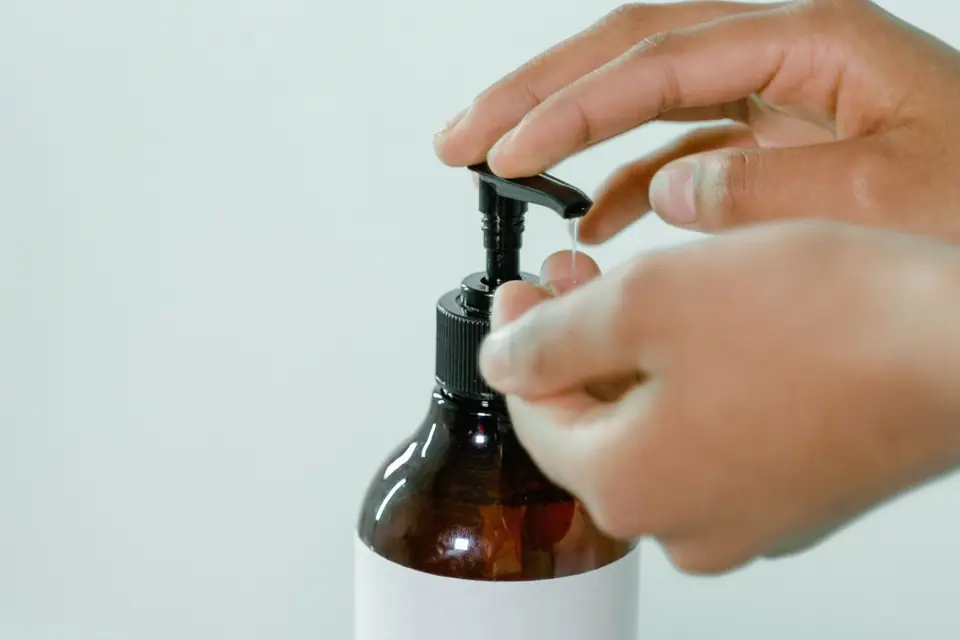
Cosmetic label requirements in India: what a label generally shows
| Item | Notes |
|---|---|
| Product name | Clear and matching your records and packaging |
| Manufacturer name and address | The licensed manufacturer; brand owner details where applicable |
| Batch number | Lets you trace the batch if a problem appears |
| Manufacturing and expiry or use-before dates | Printed so they stay readable |
| Net content | In metric units, in the correct form for the pack |
| MRP | Maximum retail price, inclusive of taxes |
| Ingredients | Listed according to the rules that apply to your product |
| Directions for use and warnings | Where needed for safe use |
| Manufacturing licence number | As required for your product category |
| Customer care contact | Phone or email for complaints |
Packaged goods are also covered by the Legal Metrology (Packaged Commodities) Rules, which the Department of Consumer Affairs administers. Ingredient guidance sits with the BIS IS 4707 series and the Cosmetics Rules, 2020.
Which rules shape a cosmetic label in India
A label has several jobs: to identify the product, to help a customer use it safely, to give the buyer the information the law requires and to let the product be traced if something goes wrong. In India, those requirements come from more than one place.
Rules are updated from time to time, so confirm the current text with the CDSCO, the Department of Consumer Affairs and the Bureau of Indian Standards before you print.
Label mistakes that cost brands money
A panel-by-panel label checklist
| Information | Where it usually goes | Check |
|---|---|---|
| Product name and type | Front panel | Matches the name on your records; not misleading |
| Net quantity | Front panel, in standard units | Correct unit and size, readable height |
| Maximum retail price (MRP) | Back or base | Shown as inclusive of all taxes |
| Ingredients list | Back panel or box | Declared by their international names (INCI), in the correct order |
| Directions for use | Back panel | Clear and consistent with the product type |
| Warnings and precautions | Back panel | Needed for the product type, such as patch testing advice or avoiding eyes |
| Batch number | Base or crimp | Unique for each batch for traceability |
| Manufacturing and expiry or use-by information | Base, crimp or back panel | Dates formatted as required |
| Manufacturer or packer name and address | Back or base | Includes the licence number |
| Consumer care details | Back panel | Phone number and email or address for complaints |
| Country of origin | Back or base | Shown on all packs sold in India |
This table is a planning tool, not legal advice. Your manufacturer reviews the details against the product, the pack size and the current rules before you approve the artwork.
How to plan label artwork the right way
Start with the legal panel
Reserve space for the required details first. Design the rest of the label around it.
Match the label to the pack
Curved bottles, tubes and small droppers each limit label size. Check the printable area with your packaging supplier.
Check proofs with your manufacturer
Compare the label text with the batch record before you print.
Plan for export
If you will sell overseas, each market has its own labelling rules. See our export guidance.
At Formuluxe we check your label content with you before printing. Our packaging and labelling service includes label printing and design help, and our compliance checklist covers the other launch duties.
Designing a label that is both legal and beautiful
The strongest labels treat legal information as part of the design instead of an afterthought. Start with a layout grid that reserves space for the legal panel, then build the brand elements around it.
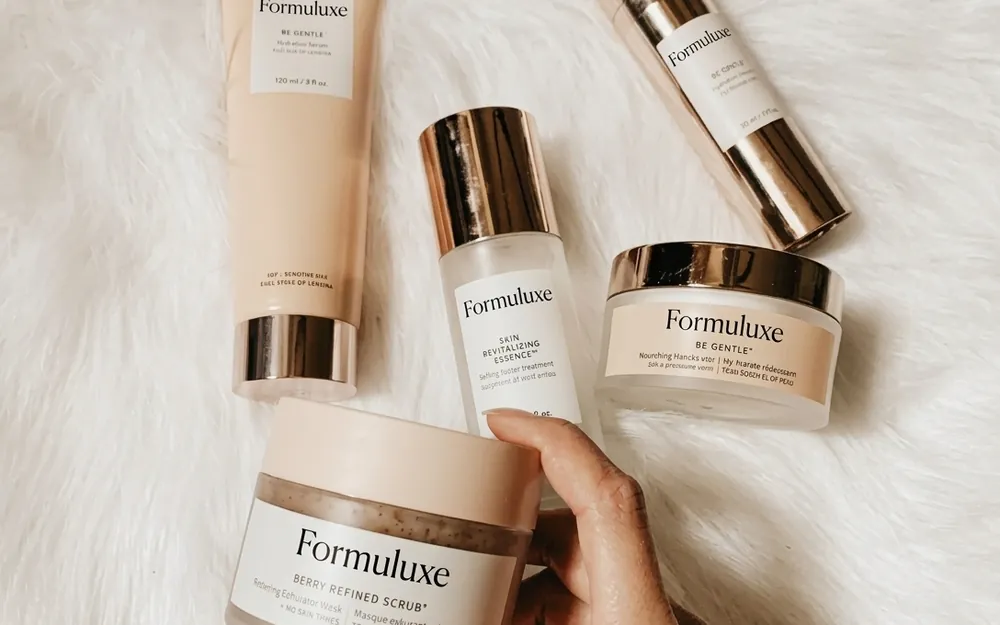
Labels for special product types
Sunscreens
Sun protection claims such as SPF and PA ratings need valid test data. Your manufacturer should confirm which tests support the numbers you print.
Products for babies and children
Extra care applies to claims, warnings and ingredients. Read our baby and kids care page and speak to your manufacturer before finalising copy.
Herbal and Ayurvedic positioning
Herbal and Ayurvedic cosmetics follow the same cosmetic rules, but the wording matters. Terms that suggest treating a disease can move a product into a different regulatory category. See cosmetic claims in India.
The approval process that prevents reprints
Draft the content first
Write all text before designing. This avoids squeezing the legal panel in later.
Send the draft to your manufacturer
Ask them to check required details and the consistency of the INCI list with the formula.
Get a printed proof
Check the size on the real bottle or box, not only on a screen.
Approve a physical sample
Apply the label to a filled sample and test it: rub it, wet it, dry it and check the adhesion.
Keep a signed record
Store the approved artwork with the version number and the batch it was used for.
Common wording errors on cosmetic labels
Run each of these against your draft before you send it to print.
Labels for export and for small packs
Labels for other countries follow different rules. The UAE, USA, Canada, Australia and Europe each require specific wording, languages, ingredient formats and sometimes responsible-person details. Do not assume an Indian label can be used unchanged. Create a separate artwork version for each market and have it checked.
For small packs under about 30 ml, space is tight. Options include a wrap-around label, a fold-out booklet label, an outer carton with the full legal text or a leaflet. Keep the essential identifiers on the pack itself and put the long text on the box.
Reading a sample label, panel by panel
The text below is invented to show the structure. It is not a template to copy.
| Panel | Example content |
|---|---|
| Front | BRAND NAME · Lightweight Vitamin C Serum · 30 ml |
| Back | Directions: apply 3 to 4 drops on clean skin in the morning. Warnings: for external use only; avoid contact with eyes; stop use if irritation occurs. Ingredients: list by INCI name. |
| Base or crimp | Batch no., manufacturing and expiry information, MRP (inclusive of all taxes) |
| Manufacturer or packer | Name and address, licence number, consumer care phone and email, country of origin |
Check every line of your own label against the rules and your formula. Details such as date formats and the exact wording of warnings depend on the product type and the current rules, so ask your manufacturer to review them.
Online listings need the same information
Marketplaces and your own website must show the same facts as the label, including ingredients, quantity, price, manufacturer or packer details and country of origin. Product photos should show the real label, not a mock-up. Using a different name or claim online than on the pack creates confusion and risk.
Keep a standard ‘product information’ sheet with the final label text, so everyone writing listings uses the same wording.
A handover checklist for your label printer
Send final artwork in the format your printer requires
Usually vector files with fonts outlined.
Specify the material and finish
Paper or film, matt or gloss, and the adhesive type for your bottle surface.
Mark space for variable data
Batch, date and price areas, left clear for coding.
Ask for a physical proof
Check colours and readability on the real pack.
Test adhesion
Check how the label behaves with moisture, oil and refrigeration if relevant.
Cosmetic Label Requirements in India: common questions
What must be on a cosmetic label in India?
Generally the product name, manufacturer details, batch number, dates, net content, MRP, ingredients, directions and warnings where needed, the licence number and a customer care contact.
Does my brand name have to appear on the label?
Your brand name is your identity, but the legal details must also be correct, including the manufacturer’s name and address. Confirm the exact requirement for your arrangement with the licensing authority.
Can I use stickers for labels?
Labels may be stickers or printed directly, as long as the required details stay legible and secure on the pack.
Do I need a different label for export?
Usually yes. Overseas markets have their own labelling rules, so check them before you print.
Does the ingredient list have to be in English?
The international names (INCI) are written in Latin script. Other information may need to be in English or Hindi, depending on the rule that applies. Confirm with your manufacturer and the current regulations.
Who is responsible for label mistakes?
The brand owner remains responsible for what is sold under its name, even when a manufacturer reviews the label. That is why approvals should be in writing.
Can I add ‘dermatologically tested’ to my label?
Only if you hold valid test evidence for it. See our guide on cosmetic claims in India for how to build a claims file.
Show all 10 questionsShow fewer questions
How big does the text need to be?
Minimum character sizes apply to certain declarations under packaged-commodity rules. Your manufacturer or printer can confirm the sizes for your pack.
Can I print the batch number myself?
Batch and date codes are usually applied at the factory by inkjet or embossing, so leave a clear area. Ask your manufacturer how it is done.
Do I need to change the label if I change the formula?
Yes, if the ingredients, claims or warnings change. Update the INCI list and review claims before the next print run.
Planning your label?
Talk to our team about the details to include on your pack before you print.