How to Start a Cosmetic Brand Without Owning a Factory
Most beauty brands you know do not own a factory. They own a name, a point of view and a relationship with customers, and they hire specialists to make the product. This guide shows how that works, what you stay responsible for and how to choose a partner you can trust.
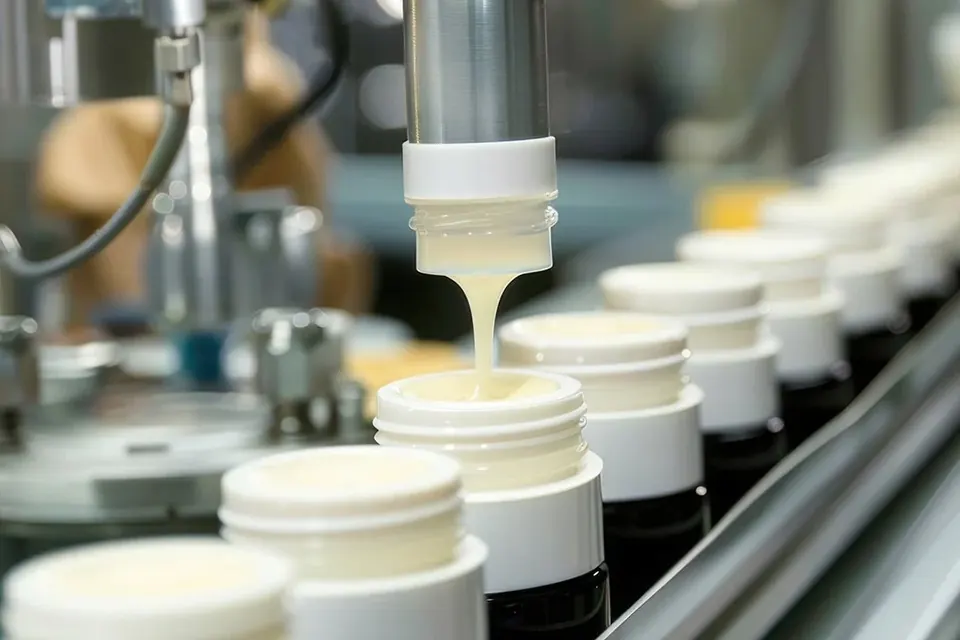
Why most new brands do not build a factory
A compliant cosmetic factory needs land, a licence, clean production areas, machines, trained staff and years of experience before it can make a product people trust. For a new brand, that money and time is better spent on research, design and customers.
Contract manufacturing lets you rent that capability. A licensed manufacturer makes your product in its own facility, to your brief, under your brand. If you want the background, read what contract cosmetic manufacturing is.
Who does what in a contract arrangement
| You | The manufacturer |
|---|---|
| Customer research, positioning, name, trademark | Formula development or supply |
| Brand, packaging design and artwork | Ingredient sourcing, batch making, filling |
| Marketing, sales channels, customer care | Quality checks, stability work, batch records |
| Licence position and legal duties as brand owner | Holding its own manufacturing licence and facility compliance |
| Decisions on claims and pricing | Advice on what a formula can realistically support |
Notice that responsibility does not disappear when you outsource. The brand owner is answerable for what is sold under its name. That is why the choice of partner matters so much. See how to choose a cosmetic manufacturer.
Three ways to outsource
Most new brands start with private label, because the formula risk is already handled and the minimum is lowest. Our private label vs third-party guide compares them.
From idea to first batch without owning a machine
Define the customer and products
Use a short brief. See how to brief a manufacturer.
Shortlist manufacturers
Check licence, facility, minimums, samples and references.
Test samples
Judge texture, scent and finish with real users.
Confirm the licence position
Your own and the manufacturer’s. See do you need a licence to sell cosmetics.
Design packaging and labels
Include legal details. See packaging and label design.
Approve and produce
Agree the batch size, timeline and payment terms in writing.
Launch small
Sell the first batch, learn and reorder.
At Formuluxe, private label typically takes 4 to 6 weeks and third-party 6 to 8 weeks once the formula and packaging are agreed. Your quote confirms timing for your product.
Traps to avoid when you outsource
Good partners welcome these questions. A manufacturer who avoids them is giving you information.
How to keep control of your brand while outsourcing
Control comes from clarity, not from owning machines. Write down the specification for each product: texture, scent, colour, pack, fill volume, shelf life target and the claims you want to make. Approve a sample against that specification before every production run.
If you ever outgrow your partner, this documentation lets you move production without starting over.
What to check about the factory you cannot own
Ask to see the facility, in person or by video. Look for clean, organised production areas, labelled materials, clear records and trained staff. Ask which standards the company follows. Formuluxe works in line with ISO 22716 good manufacturing practice for cosmetics; see ISO 22716 GMP and our facility page.
Visit the quality page for what we document, and request a free sample to judge the product yourself.
A simple scorecard for judging samples
| Check | What to look for |
|---|---|
| Texture | Spreads evenly, no graininess or separation |
| Scent | Pleasant, not too strong, same across samples |
| Absorption and finish | Matches the description in your brief |
| Skin feel after one hour | No tightness, stickiness or irritation for your testers |
| Pack compatibility | Pump works, no leakage, no change in colour |
| Consistency | A second sample matches the first |
Give samples to at least five people in your target group and ask for honest comments after a week of use. Free samples at Formuluxe cost you only shipping. See request a sample. Never launch on one person’s opinion.
What a good manufacturing agreement covers
Ask a lawyer to review the agreement before you sign. A short, clear agreement protects both sides and avoids misunderstandings.
Plan your cash around the minimum, not the dream
Without a factory, your biggest early cost is the first order. Minimums set it. At Formuluxe the minimums are 1,000 units for private label, 2,000 for third-party and 5,000 for bulk. Smaller runs let you test the product while you keep cash for marketing.
Work out your total using the cost guide and your margin using unit economics. If the plan only works at a larger quantity than you can fund, reduce the range, not the quality.
What the timeline looks like when someone else makes the product
| Stage | What happens | Who leads |
|---|---|---|
| Brief | You describe customer, products and target quantity | You |
| Quote and samples | Manufacturer proposes formula and price; you test samples | Both |
| Packaging and artwork | You choose and approve packs and labels | You |
| Production | Batch made, filled and packed | Manufacturer |
| Delivery and launch | Goods arrive; you list and sell | You |
At Formuluxe, private label typically takes 4 to 6 weeks and third-party 6 to 8 weeks once the formula and packaging are agreed. Packaging lead times from other suppliers can be longer, so order packaging early. See how it works for the five steps.
Signs you have outgrown your first arrangement
Moving up is usually a conversation, not a break. At Formuluxe a brand can move from private label to third-party or bulk as it grows.
Before you sign with a manufacturer
If any box is empty, ask before you pay. The asking costs nothing and the missing answer can cost months.
How to Start a Cosmetic Brand Without Owning a Factory: common questions
Can I really start a cosmetic brand without a factory?
Yes. Many brands use licensed contract manufacturers. You remain responsible for the brand, claims, labels and your own licence position.
Do I need my own licence if I outsource?
Ask your State Licensing Authority and get the answer in writing. See our licence guide for how the Cosmetics Rules, 2020 treat manufacturing and loan licences.
Who owns the formula?
In private label the manufacturer’s formula stays with the manufacturer. In third-party manufacturing it should be yours, confirmed in writing.
How small can my first order be?
At Formuluxe, private label starts at 1,000 units, third-party at 2,000 and bulk at 5,000.
Is my product idea kept confidential?
At Formuluxe, yes. We keep your project and formula details confidential.
How do I know a manufacturer is licensed?
Ask for a copy of the manufacturing licence, check the licence number, premises and product categories, and confirm with the State Licensing Authority if needed.
Can I visit the factory?
Ask. At Formuluxe you can arrange a visit or a video call through our contact page.
Ready to start without a factory?
Tell us your customer, products and target quantity. We will recommend the model and send a written quote. Private label starts at 1,000 units.