What Is Contract Cosmetic Manufacturing and How Does It Work?
Contract cosmetic manufacturing means a specialist company makes your products while you focus on your brand, customers and sales.
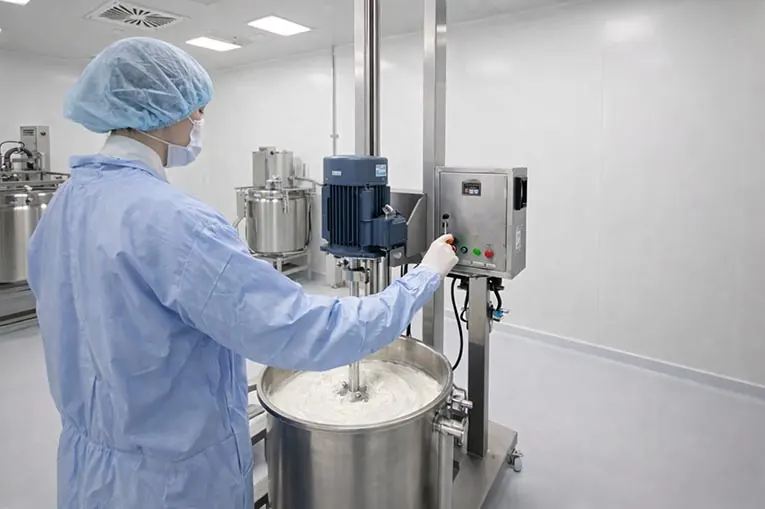
Contract cosmetic manufacturing in one paragraph
In contract cosmetic manufacturing, a brand hires a licensed manufacturer to produce its products. The manufacturer owns the factory, the equipment and the quality systems. The brand owns the name, the marketing and the customer relationship. It is also called outsourced or OEM cosmetic manufacturing.
The idea is simple: building a compliant factory takes land, machines, licences, trained staff and years of experience. Most beauty brands are better off spending that money on their brand.
Why contract manufacturing exists
Making cosmetics well needs formulation chemists, mixing tanks, filling lines, testing equipment, a licensed premises and trained staff. Building that is a major investment. Contract manufacturing lets a brand buy access to it. The brand focuses on the customer, marketing and design, and the factory focuses on production.
Many well-known beauty brands around the world use contract manufacturers for at least part of their range. Using one is not a shortcut or a compromise. It is the standard way the industry works.
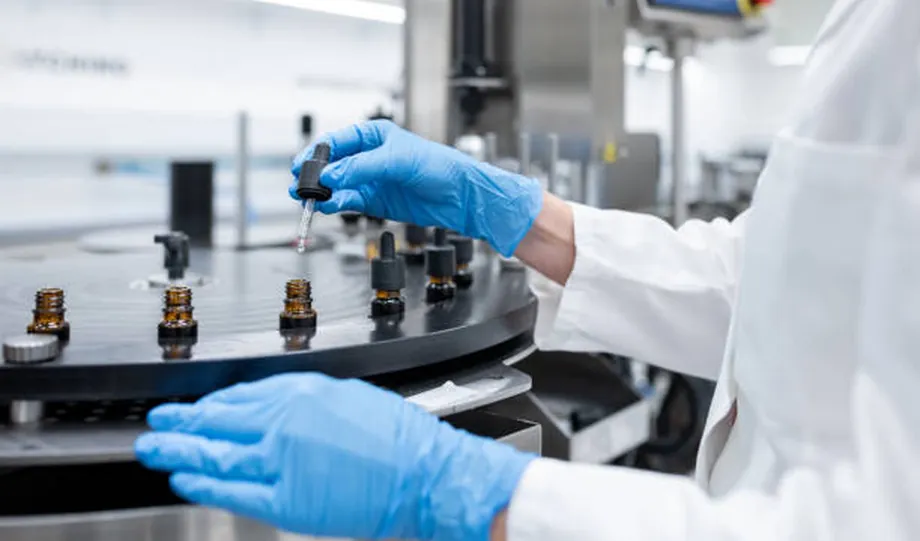
Three ways contract manufacturing works
See private label vs third-party manufacturing for help choosing.
What a full-service contract manufacturer offers
| Service | What it covers |
|---|---|
| Formulation and R&D | Developing a new formula or adapting a ready formula to your brief |
| Sourcing | Buying ingredients, packaging and components from approved suppliers |
| Compounding | Mixing batches at a scale that is stable and repeatable |
| Filling and packing | Filling bottles, tubes or jars, capping, labelling and boxing |
| Quality control and testing | Checking raw materials, in-process samples and finished batches; stability and microbial testing |
| Regulatory support | Guidance on licences, labels and claims for your product type |
| Warehousing and shipping | Storing and dispatching finished goods, sometimes to export markets |
Not every manufacturer offers every service. Ask what is included in the quoted price and what is handled by you or a third party.
What the manufacturer does for you
Develops or supplies the formula
In a laboratory with trained chemists.
Sources ingredients and packaging
From approved suppliers, with checks on arrival.
Makes and fills each batch
Under written instructions and records.
Tests and documents
Stability, packaging fit and batch records.
Delivers
Packed and shipped to you in India or overseas.
The full process is on our how it works page.
How the relationship works day to day
Enquiry and brief
You share your product idea, volumes and timeline.
Quote and agreement
The manufacturer quotes and you agree terms covering minimums, payment, timelines and confidentiality.
Samples and approval
You test samples and approve the formula, pack and label.
Production and quality checks
The batch is made, tested and released.
Delivery and records
Goods ship with batch records and documentation.
Reorders and improvements
Repeat orders become faster as the formula and packaging are fixed.
A good manufacturer behaves like a partner. They tell you when something will not work, suggest cheaper alternatives and keep you informed about delays. See how it works at Formuluxe for our five steps.
Why brands choose it, and what to watch
Watch for hidden risks: unclear formula ownership, no batch records, high minimums and unclear timelines. Our guide on how to choose a cosmetic manufacturer lists what to ask. Licences still matter: the brand owner has legal duties, as our compliance checklist explains. The CDSCO website is the national starting point for cosmetic regulation.
What the agreement should cover
How to choose and test a manufacturer before committing
Use our full list in how to choose a cosmetic manufacturer, then compare private label and third-party to pick the model.
Five myths about contract manufacturing
‘It is only for big companies’
Many contract manufacturers specifically serve small and new brands. Minimums are the practical limit, not company size.
‘The factory will copy my product’
Reputable manufacturers protect client formulas with confidentiality terms. Ask how they do it and put it in writing.
‘My brand is less real if I do not own the factory’
Brand value comes from the customer experience, trust and consistency, not from owning machinery.
‘Quality depends only on price’
Quality depends on systems, people and materials. A cheap quote with no batch records is risky; a fair quote with documentation is safer.
‘Once I start, I am locked in’
Not if the agreement is clear. Private label can be swapped between manufacturers more easily than a custom formula, which you own and can move.
What to prepare before you contact a manufacturer
A clear brief gets a faster, more accurate quote, and it shows the manufacturer that you are serious. You do not need a perfect document. A page is enough.
The product
Type, format and the main texture you want: gel, lotion, cream, oil or foam.
The customer
Age, skin or hair concern, budget and where she or he buys.
The promise
The two or three benefits you want to talk about, in plain words, before any claim wording.
Key ingredients
Any ingredient you want to highlight, and any you want to avoid, such as fragrance or certain preservatives.
Packaging ideas
Bottle, pump, tube or jar, size and whether you want stock or custom packaging.
Quantity and timeline
How many units you can start with and when you want to launch.
References
Two or three products you like, with what you like about them, and one you do not like and why.
Attach photos or links if you have them. If you are unsure about any item, say so. A good manufacturer will help you fill the gaps, and that conversation is a useful test of how they work.
A realistic timeline for your first project
| Stage | What happens | Typical pace |
|---|---|---|
| Brief and quote | You share the brief and receive a quote | Days to a couple of weeks |
| Sampling | You receive samples and give feedback | Private label: free samples; third-party: several rounds |
| Packaging and artwork | Packaging is chosen, labels designed and approved | Often runs alongside sampling |
| Production | The batch is made, tested and filled | About 4 to 6 weeks for private label and 6 to 8 weeks for third-party, once approvals are done |
| Delivery | Goods ship with batch records | Depends on destination |
These are typical ranges at Formuluxe, not promises. Delays most often come from late approvals, packaging supply and artwork changes. You can speed things up by answering quickly and fixing the label early.
Terms you will hear, in plain language
| Term | Meaning |
|---|---|
| MOQ | Minimum order quantity: the smallest run the factory will make |
| INCI | International names for ingredients, used on labels |
| Batch | One production run of a product, with its own number and records |
| COA | Certificate of analysis: a lab report on an ingredient or finished batch |
| Stability test | Tests showing how a product holds up over time, heat, light and packaging |
| Private label | A ready formula sold under your brand |
| Third-party | A custom formula made for you |
| GMP | Good manufacturing practice: controlled, documented production |
| Loan licence | A licence for a brand whose products are made at another company’s licensed premises |
| Lead time | The time between approval and delivery |
What a good first response looks like
Our free sample and five-step process are designed around these points.
What should be inside a manufacturing quote
When comparing quotes, line up the same scope. A quote that looks cheaper may exclude testing or packaging. Start with a request through our contact page and include your product, quantity and timeline.
What Is Contract Cosmetic Manufacturing and How Does It Work?: common questions
Is contract manufacturing the same as private label?
Private label is one kind of contract manufacturing, in which you choose a ready formula. Third-party and bulk manufacturing are other kinds.
Do I still need a licence?
Brand owners generally need the right licence for the products they sell. Check with your State Licensing Authority.
Who owns the formula?
In private label the manufacturer’s formula stays with the manufacturer. In third-party manufacturing your formula belongs to you, and should be confirmed in writing.
Is my product idea kept confidential?
At Formuluxe, yes. We keep your formula and project details confidential.
Is contract manufacturing safe for my formula?
It can be, with the right protections: a confidentiality agreement, clear formula ownership terms and a manufacturer with a track record. Ask how they protect client formulas.
Can a contract manufacturer sell my product to someone else?
Not if the agreement says otherwise. For third-party projects your formula should be exclusive to you. For private label, the base formula belongs to the manufacturer and may be offered to others.
Are contract manufacturers only for big brands?
No. Many serve startups, with minimums as low as 1,000 units for private label at Formuluxe.
Show all 10 questionsShow fewer questions
What does it cost to start?
Costs depend on the model, product and packaging. Request a quote with your brief and volume to get real figures.
What is the difference between a contract manufacturer and a supplier?
A supplier sells ready products or materials. A contract manufacturer makes a product for your brand to your brief or from its own ready formula, with your label.
Do I need a loan licence?
A brand that has its products made at another company’s licensed premises generally applies for a loan licence from the State Licensing Authority. Check the current process on the CDSCO portal and with your State Licensing Authority.
Want to see how it works for your product?
Share your brief and we will explain the model, minimums and timeline for your product.