Hair Conditioner Manufacturer in India
A hair conditioner manufacturer builds an acidic cream from fatty alcohols and cationic ingredients that smooths the hair surface and makes it easy to comb. Formuluxe makes conditioners from 1,000 units under private label.
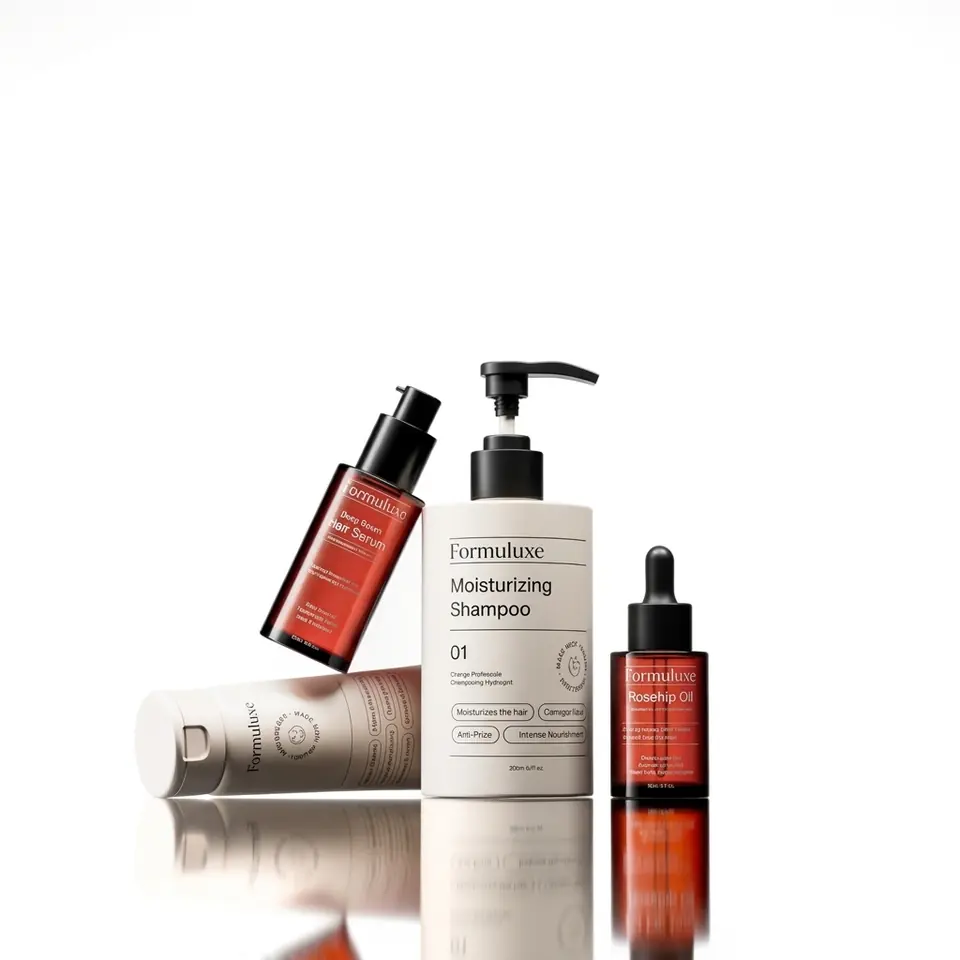
Conditioner formats
Conditioner is the natural second product for a shampoo brand, and often the better margin. The type you choose changes the pack, the use and the story.
| Format | Use | Notes |
|---|---|---|
| Rinse-off conditioner | Applied after shampoo, left for a minute or two, washed out | The standard product; thick cream in a bottle or tube |
| Leave-in conditioner | Applied to damp hair and left in | Lighter, often a spray or lotion; needs careful preservation |
| Two-in-one shampoo and conditioner | Single wash | Compromise formula, less effective on either job |
| Salon conditioner | Used at the basin in larger quantities | Concentrated, bigger packs, pump or tube |
Why a conditioner is acidic and creamy
Hair carries a slight negative charge after shampooing. Cationic conditioning agents carry a positive charge, so they cling to the hair surface and flatten the cuticle. Fatty alcohols such as cetyl and stearyl alcohol give the cream its body and slip.
Silicone-based or silicone-free conditioner
| Silicone-based | Silicone-free | |
|---|---|---|
| Slip and shine | Strong and immediate | Softer, depends on oils and polymers |
| Build-up | Possible over repeated use | Lower |
| Cost | Lower | Higher |
| Story | Smooth, easy comb | Clean, light, natural positioning |
Neither is the right answer. Match the choice to your customer: salons and mass-market buyers often like silicone slip, while clean-beauty buyers want it gone.
Conditioner packaging
Thick conditioners suit wide-mouth tubs, squeeze tubes and bottles with a pump. Thin leave-in versions need a spray or a small pump. Choose the pack with the formula, not after, since viscosity decides what dispenses properly.
How we develop a conditioner
The key decision is the weight of the conditioner for your customer’s hair. Fine hair wants light conditioning, and thick or curly hair wants heavy. We test the sample on swatches of the hair types you target.
We match the pH, fragrance and look to your shampoo so the two products feel like a pair.
Conditioner as a second product
Conditioner is typically the second product a shampoo brand sells. Customers who like the shampoo will try the conditioner, and the basket size grows. Bundle them for a first-order offer.
MOQ and lead time for hair conditioner
| Route | Minimum order | Typical timeline |
|---|---|---|
| Private label (ready formula under your brand) | 1,000 units | 4 to 6 weeks |
| Third-party (our lab makes your custom formula) | 2,000 units | 6 to 8 weeks |
| Bulk manufacturing | 5,000 units | Quoted per order |
Samples are free and you pay shipping only. Request a sample once you have decided the product and the pack. Price depends on the formula, the pack and the quantity, so we quote after the brief. Read how to price your product before you fix a selling price. See how it works for the steps from brief to delivery.
Inside a hair conditioner
| Ingredient (INCI) | Role | Note |
|---|---|---|
| Cetearyl alcohol, cetyl alcohol | Body and softness | Fatty alcohols that build the cream |
| Behentrimonium chloride or methosulfate | Main conditioning agent | Positive charge clings to hair |
| Dimethicone or amodimethicone | Slip and shine | Omitted in silicone-free versions |
| Glyceryl stearate, stearamidopropyl dimethylamine | Emulsifier and secondary conditioner | Affects texture and stability |
| Panthenol, hydrolysed protein | Repair feel | Support a smoothness claim |
| Citric or lactic acid | pH adjustment | Sets the mildly acidic range |
Tests for a conditioner
Common conditioner mistakes
Hair Conditioner: common questions
Do I need to make shampoo and conditioner together?
It helps. Customers buy them as a pair, and a matching fragrance makes the range feel complete.
Can you make a silicone-free conditioner?
Yes. We use natural oils and polymers instead of silicones, and test the feel on hair swatches.
Can a conditioner be used on the scalp?
Normally no. It is meant for the lengths. If you want a scalp product, consider a serum or mask made for that.
Is a conditioner meant to be used daily?
Yes, after every wash for most users. A mask is the weekly treatment.
Can a conditioner be sold in sachets?
Yes, with a thicker formula. Ask us about sachet minimums at the brief stage.
Planning a hair conditioner?
Tell us the active, the pack and the quantity. Free samples, you pay shipping only.